Don’t stop at the recommendation.Deliver the system that runs it.
End every engagement with a working product in the client’s channels, not a slide deck in their drive. With Runtype as the AI product runtime underneath, solo consultants, fractional operators, and domain experts hand over systems that keep working after they leave.
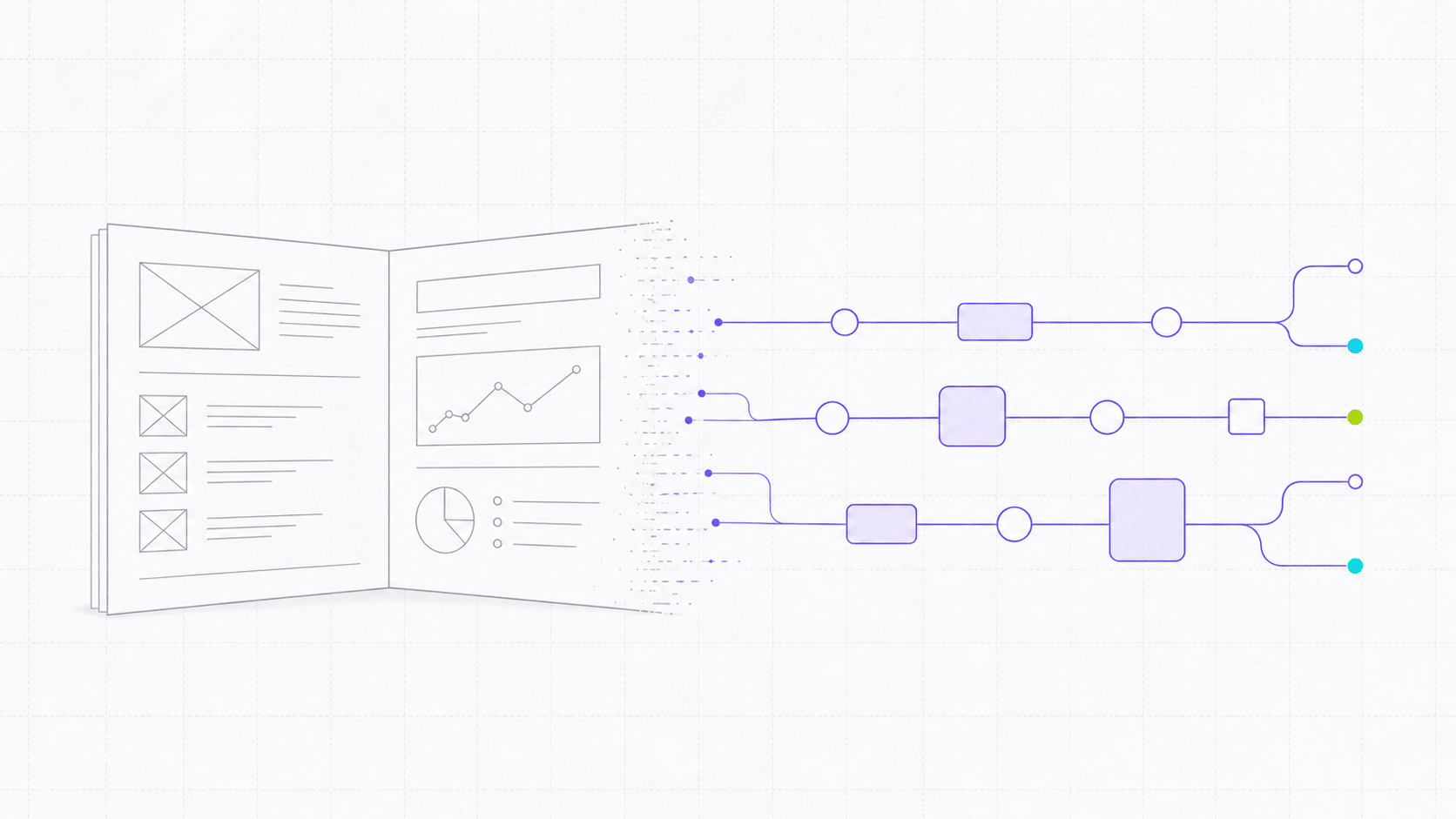
Advice doesn’t compound. Products do.
Workshops, prompt packs, and strategy docs create a moment of value and then decay. The clients who keep paying are the ones running something you built: every week, in their own channels, with your name on the quality. Getting there used to require an engineering team. That was the moat keeping consultants out of product revenue.
Deliverables that outlive the engagement
Recurring runs that justify retainers
Your methodology, encoded and repeatable
Delivery into the client’s Slack and email
Evidence of quality for every run
Zero infrastructure to babysit
Why expertise alone stops scaling.
The consulting playbook has three well-known dead ends. All three trace back to the same gap: expertise that never becomes an operated system.
The workshop
Two great days, a prompt library, real enthusiasm. Ninety days later adoption is two people, the prompts have drifted, and the renewal conversation is uphill.
The pilot script
You wire up a script or an n8n flow for one client. It works until you’re the unpaid on-call engineer for every client environment you’ve ever touched.
The scaling wall
Your expertise is the product, but every new client means bespoke delivery work. Revenue stays linear with your hours, which was the thing you were trying to escape.
Your methodology, running as a product.
Each building block removes one reason productized consulting used to require an engineering team.
Your methodology as an asset
Flows
Encode your process as a fixed sequence of steps whose outputs always match your format. The system that embodies your thinking becomes a deliverable you sell to the next client: configured, not rebuilt.
Retainers built on recurring value
Schedules
Weekly briefings, monthly analyses, and ongoing monitoring run themselves. The client sees your work product every Monday; you see a retainer that renews.
Deliver where the client lives
Surfaces
Ship into the client’s Slack, inbox, or a branded chat without building or hosting anything. Adding a delivery channel is a configuration change.
Client context that compounds
Records
Engagement memory, artifacts, and history persist per client. Month three is smarter than month one, and that compounding is your defensibility.
Proof, not promises
Evals + logs
Show test results when you tune a prompt or change a model, and execution logs when anyone asks what the system did. Credibility you can attach to an invoice.
In the loop, not the bottleneck
Approvals
Review designated outputs before they reach the client’s stakeholders: on your schedule, inside the workflow, and without becoming the human router for every run.
The engagement that ends vs. the system that stays.
Same expertise, two different businesses. One bills hours; the other operates products.
Productized offerings, ready to package.
Each of these turns a familiar engagement type into a system the client runs, and pays for, long after the engagement ends.
Domain copilot
Your domain expertise as an always-available assistant for the client’s team, grounded in their context and shaped by your methodology.
Client ops agent
Automates the operational workflow you advised on (triage, drafting, enrichment, routing), with approval gates where judgment matters.
Proposal and SOW generator
Turns discovery notes into structured proposals in the client’s format, for their team or as the tool that scales your own practice.
Common questions
Do I need to be an engineer?
No. Agents, flows, tools, and surfaces are defined and configured in the dashboard, and AI-assisted building helps you go from a described workflow to a running product. If you can design the process, you can ship the system.
Can I sell the same product to multiple clients?
Yes, that’s the model. Your flows and agents are reusable definitions; each client gets their own configured instance with their own records, credentials, and channels.
Whose account does it run in?
Either works. Operate it from your workspace as a managed service, or set it up in the client’s account and hand over the keys at the end. Client credentials stay encrypted and out of model context either way.
What happens when I’m not watching?
Scheduled runs execute on time, errors are logged with full traces, and approval steps hold anything that needs your judgment until you get to it. The system runs; you review.
From engagement to running product
What changes when your methodology has to run on a schedule for a client instead of in a workshop.
How to get from an impressive demo to something on-call can support
The gap list between an AI demo and a supportable feature: identity scoping, secrets, budgets, logs, evals, rollback, escalation, alerts and a runbook.
ExplainerWhy AI pilots stall at 80%, and what the last 20% actually is
The last 20% of an AI pilot is six blockers with six artifacts: a quality bar, an eval report, a cost model, a data-flow map, an escalation design, an owner.
GuideHow to add an AI assistant to a product people already pay for
A sequenced plan for adding an AI assistant to an existing SaaS product: one job, the data boundary and auth pattern, the surface, failure behavior, one metric.
GuideHow to expose your agent as an API your customers can call
Designing an AI agent API customers call from their own code: request and response shape, sync or async run handles, streaming, idempotency, keys, versioning.